One phrase, split into cards.
A recovery phrase on one piece of paper has two ways to end badly: the paper is lost, or you are, and nobody left knows what it was for. Keyfob is for both.
Get it on Google Play
A recovery phrase on one piece of paper has two ways to end badly: the paper is lost, or you are, and nobody left knows what it was for. Keyfob is for both.
Get it on Google Play
It is not a wallet.
It never sees an address, a balance or a transaction, and it cannot move anything. It cannot even reach the network to try: the app declares no internet permission, which you can check on the Play listing before you install it.
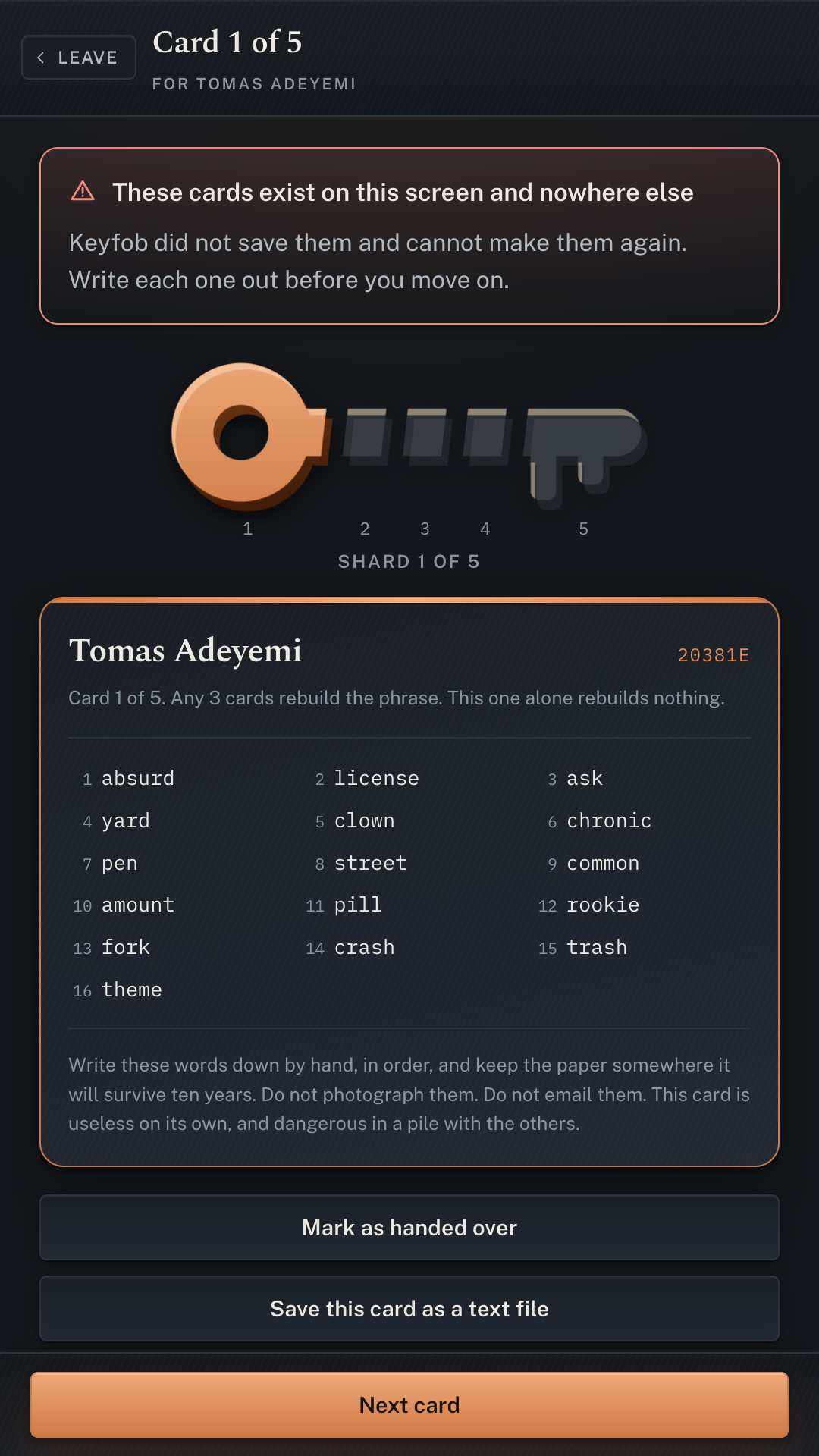
Your phrase is a number. Keyfob picks a random curve through that number and hands each guardian one point on it. Below the threshold, every possible phrase stays exactly as likely as it was before, which is a stronger promise than encryption can make. Reach the threshold and the curve, and the phrase, come back.
This is Shamir secret sharing over the field of 256 elements, the same arithmetic behind SLIP-39 hardware wallet backups. Cards are written in the same 2048 BIP-39 words a recovery phrase uses, so a guardian is copying out one familiar kind of thing, and a checksum catches a mistyped or swapped word before anything is built on it.
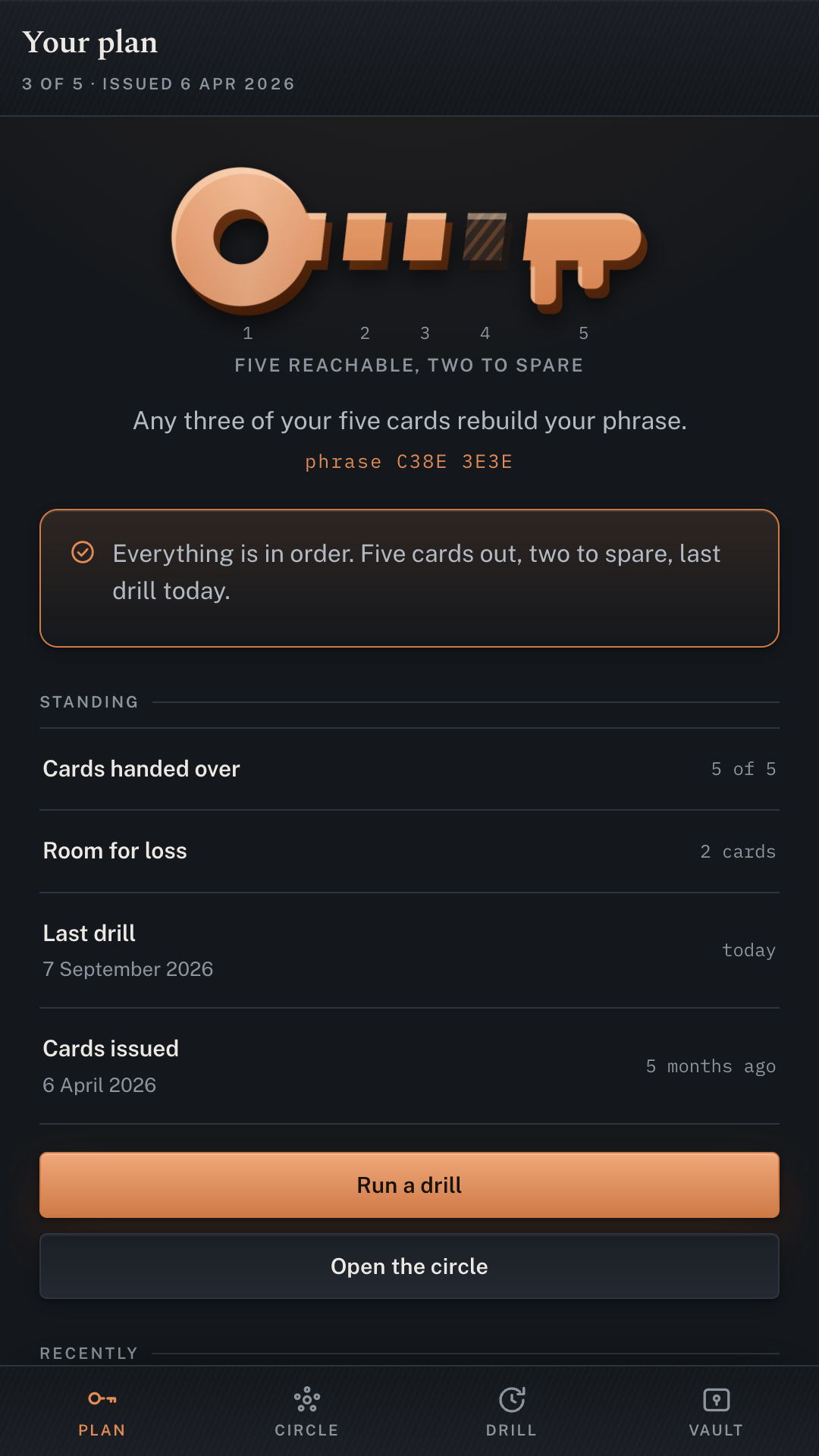
Which guardian has which card, where it lives, and how to reach them. Three of five is the usual answer, and the app will argue with you if you pick something fragile.
Written once, kept with the plan, for the person who has to do this without you. It is the part everybody means to write and nobody does.
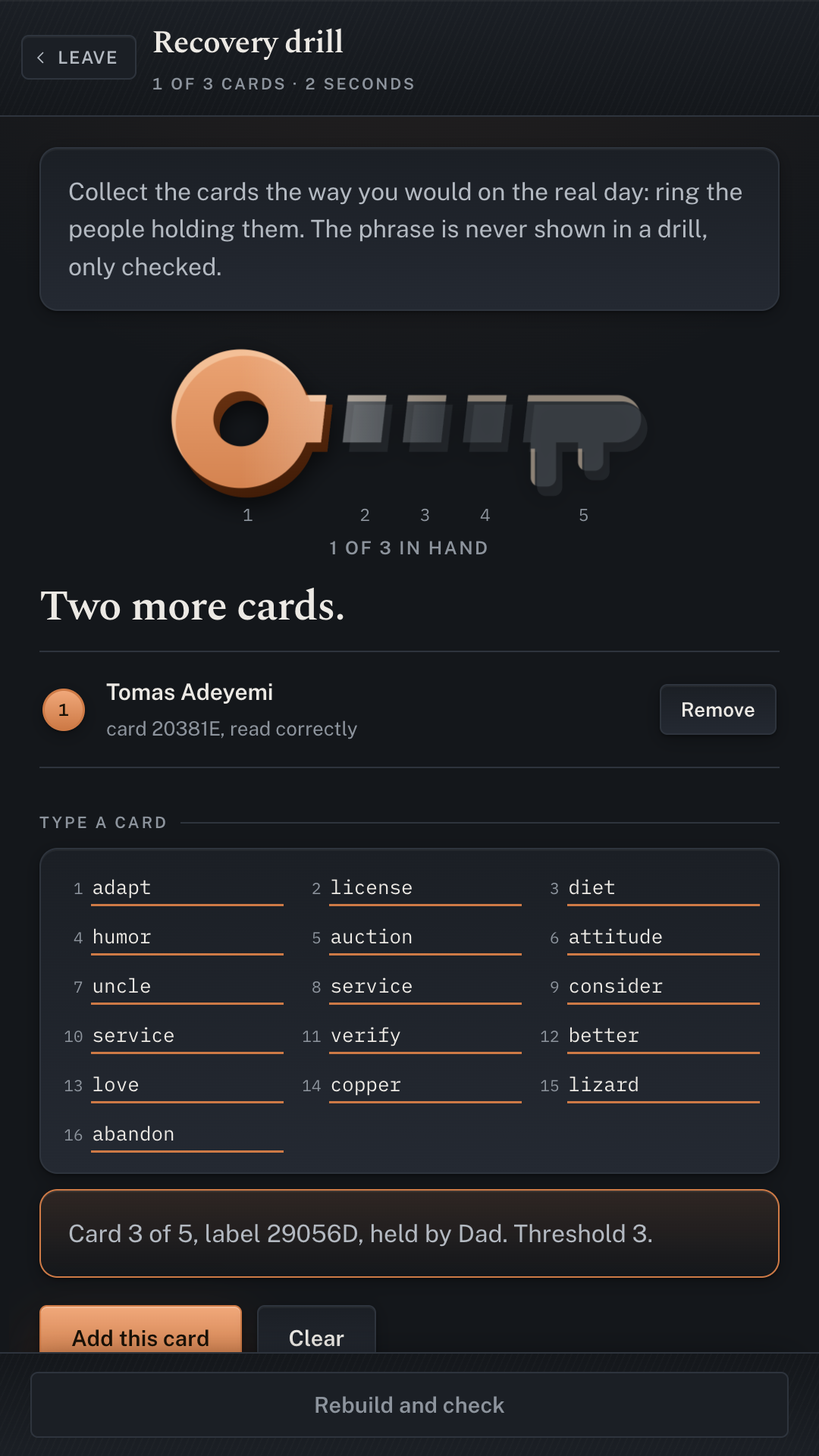
A drill: ring the people holding the cards, type them back in, and time it. The phrase is checked against its fingerprint and never shown. A recovery plan nobody has practised is a wish.
In plain words: what this defends against, and what it does not. Followed by a short quiz, because understanding it is the point.
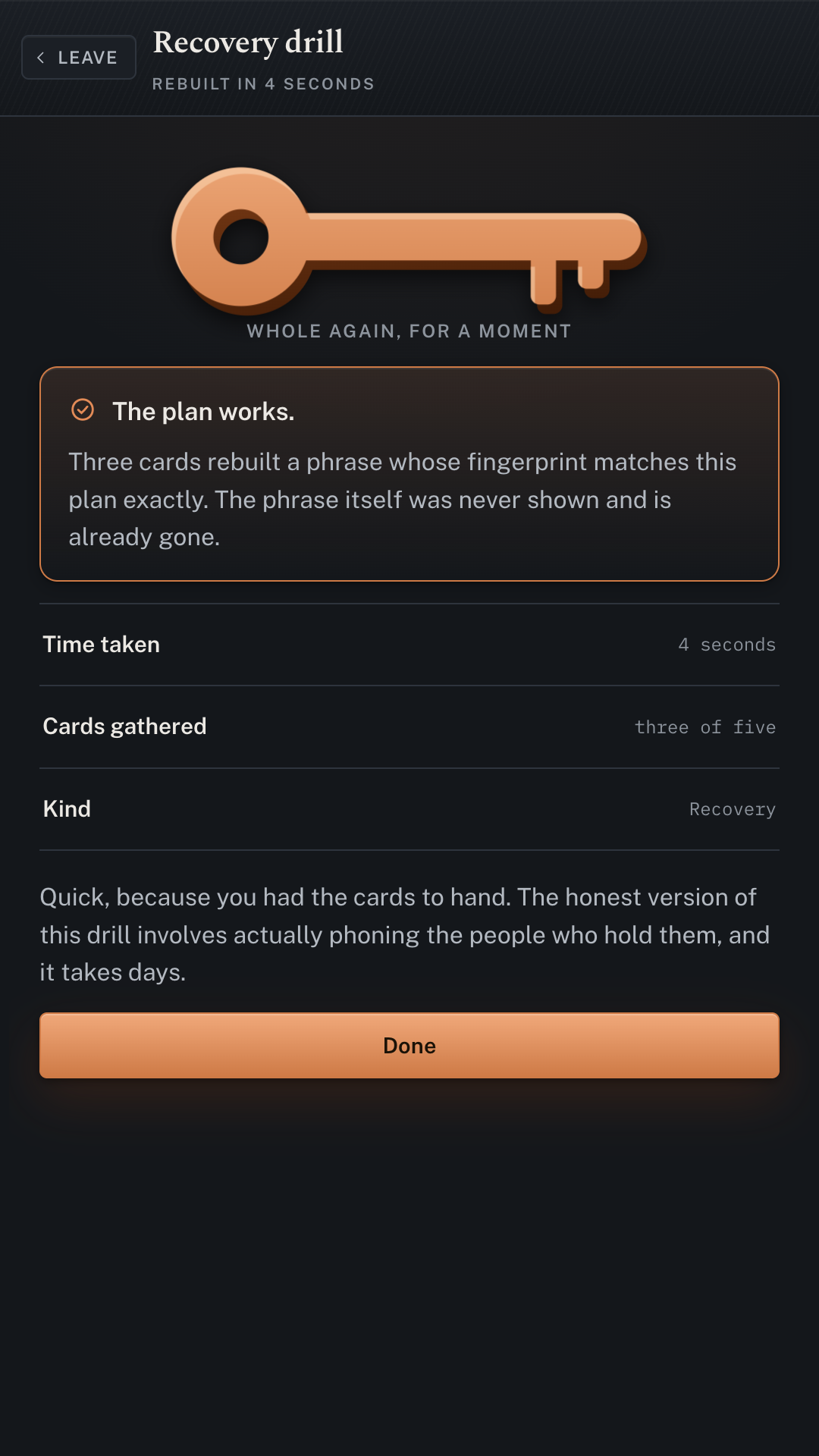
Your phrase is never stored. It exists while the cards are built, and then it is gone.
Get it on Google Play