Remember your people.

A notebook for the friendships you mean to keep. It holds the names, the rhythms and the details, and tells you gently when someone has drifted.

Get it on Google Play

Free and complete. No account, no subscription, and no internet permission at all.
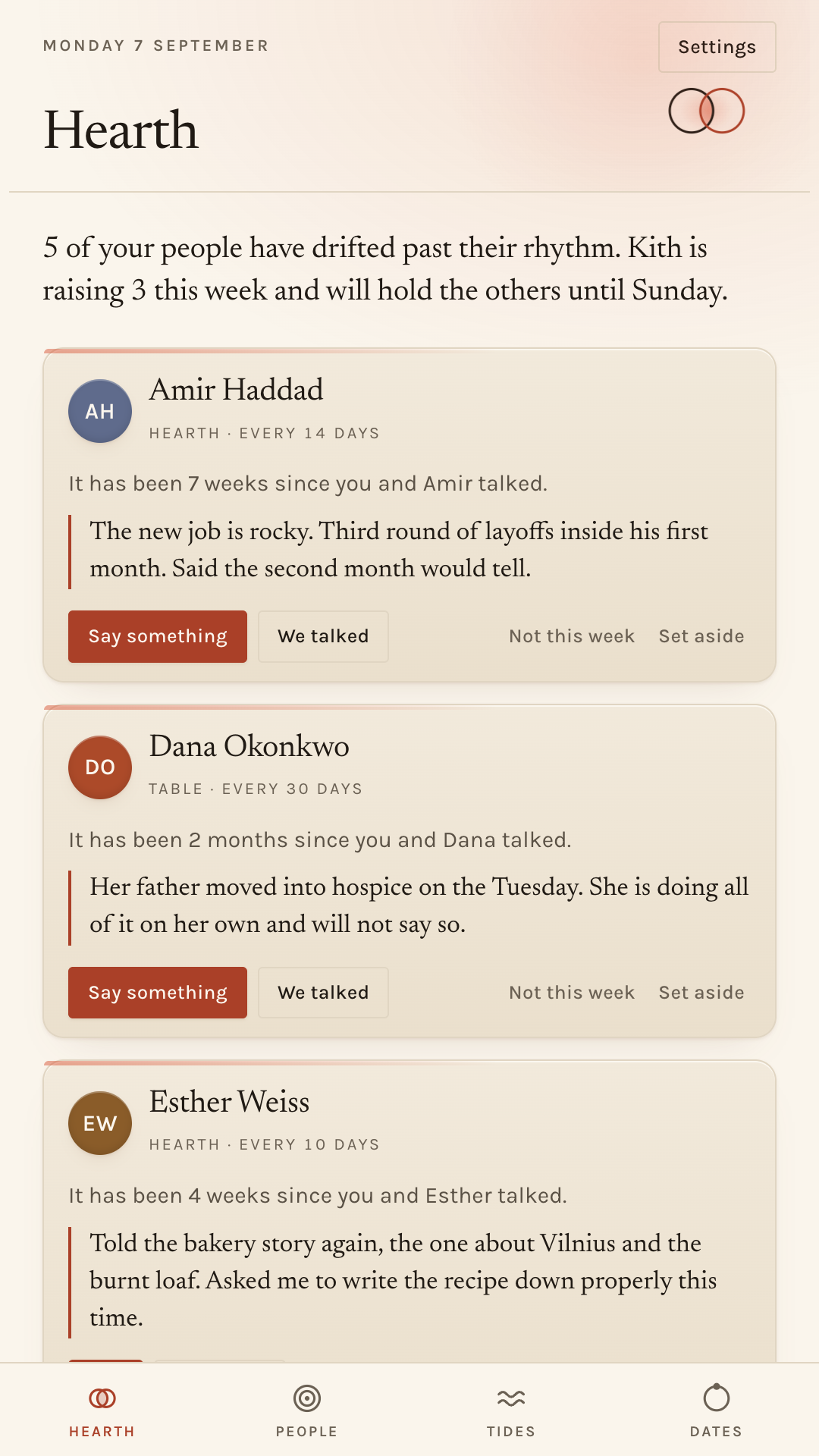
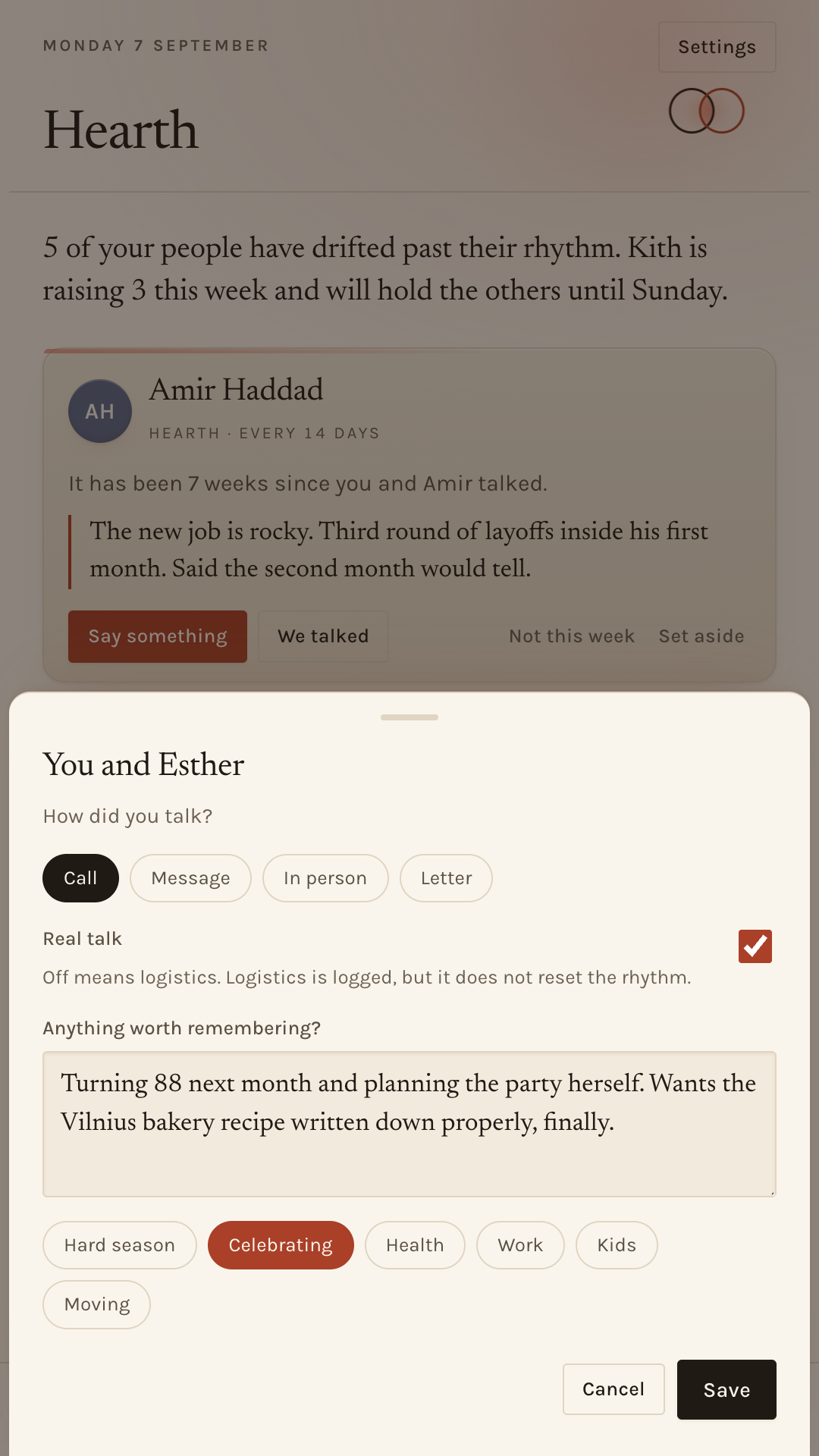
The Hearth screen showing three gentle nudge cards, each with a name, how long it has been, and a detail from the last conversation.

It is eleven at night, a photograph of an old friend comes past, and you do the arithmetic.

Eight months? A year? You love these people. You are simply bad at the logistics of loving them, because memory was built for a village and your people are spread across four apps and three time zones. That is not a character flaw. It is a filing problem, and filing problems have solutions.

Four rings, four rhythms

Attention is finite. Kith asks you to spend it on purpose. Everyone you add sits in one of four circles, and each circle carries its own idea of how often is often enough. You can override any of it, per person, in a tap.

Hearthevery 2 weeks

The people you would call from a hospital. About five of them, if you are lucky.

Tableevery month

Close friends. The ones you would tell first.

Villageevery 3 months

Real friendships that need tending to stay real.

Horizononce a year

People worth not losing. A year is not neglect at this distance. It is a rhythm.

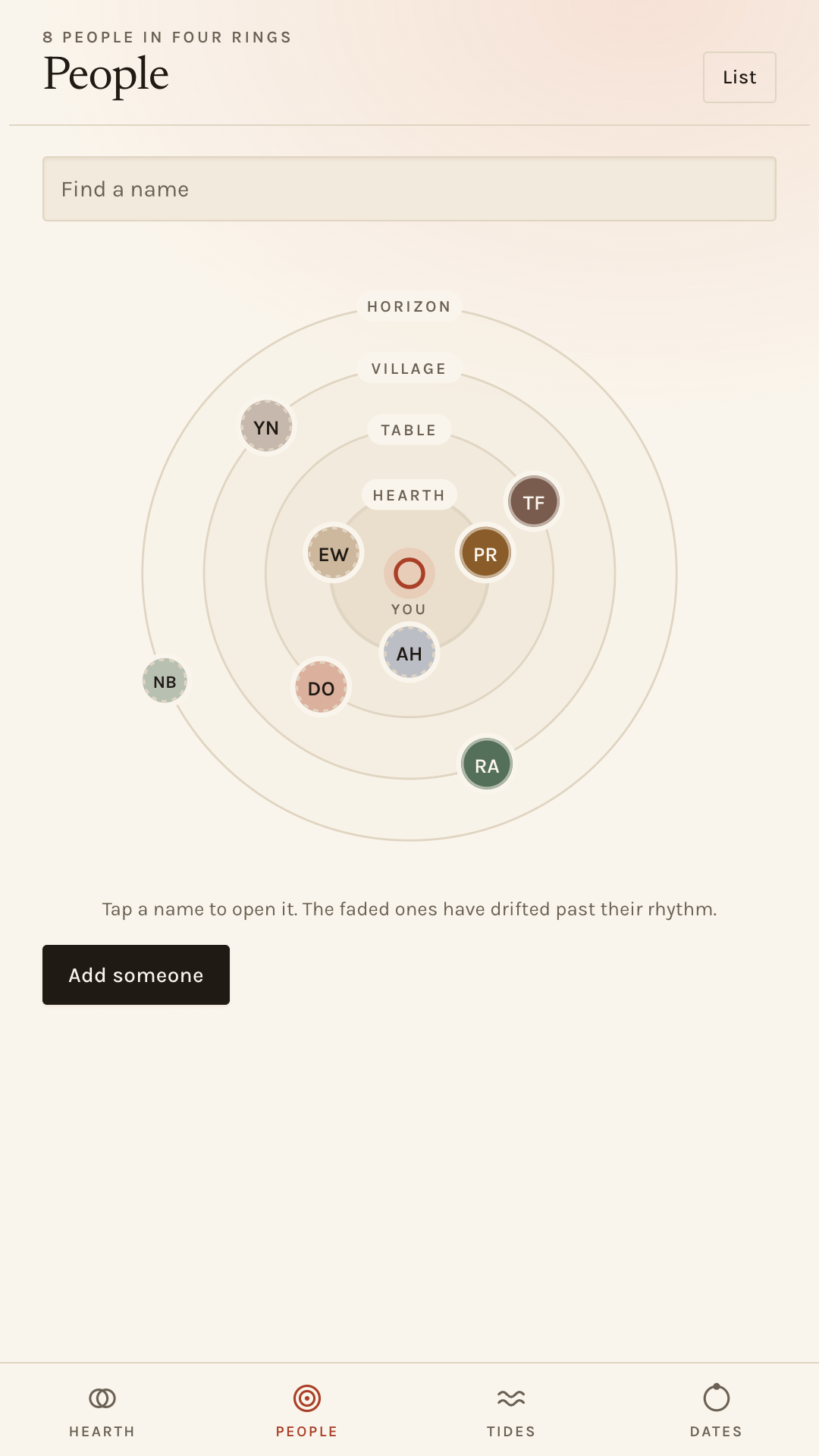
The People screen: four tinted concentric rings with initials placed around them and you at the centre.
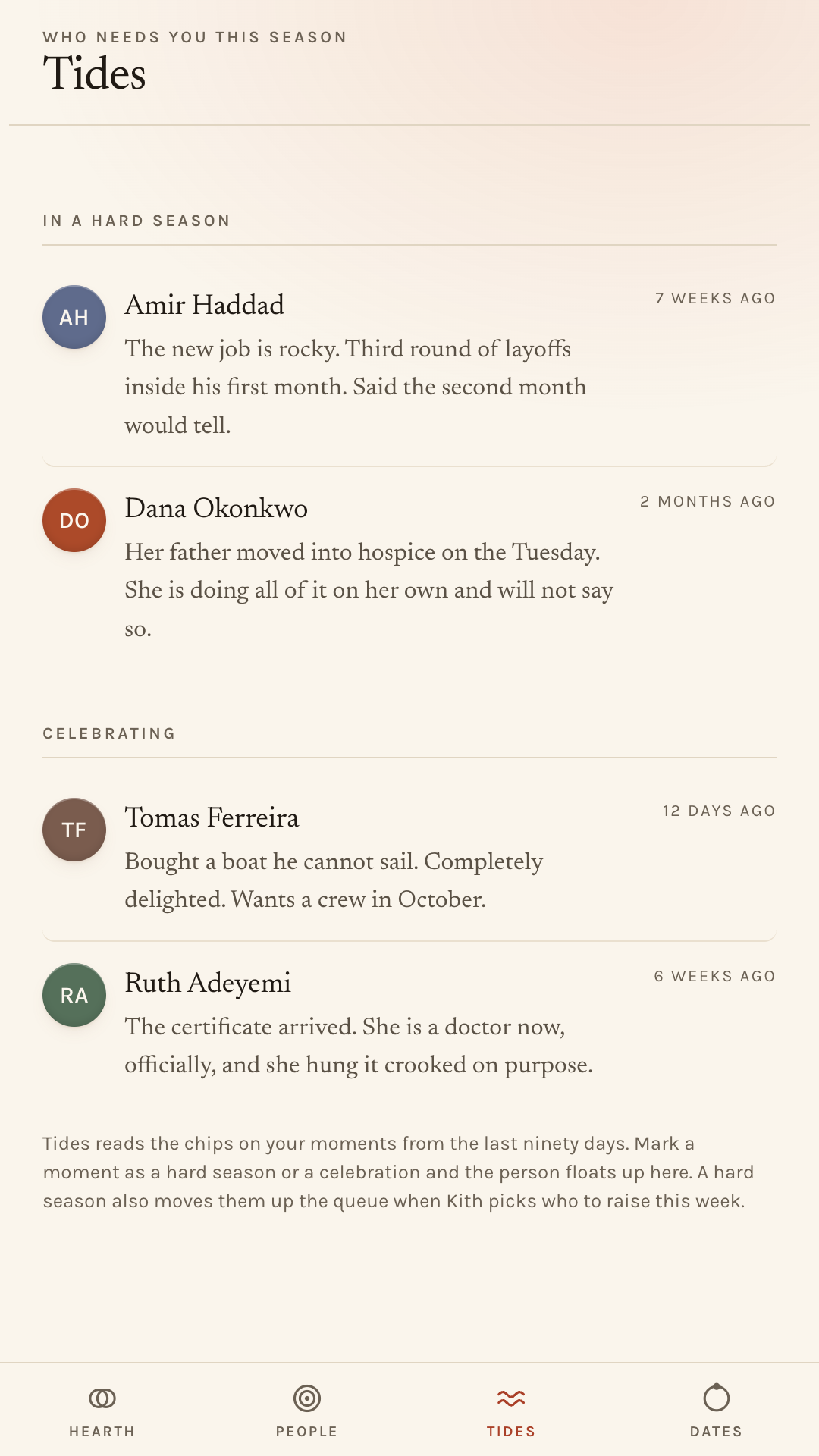
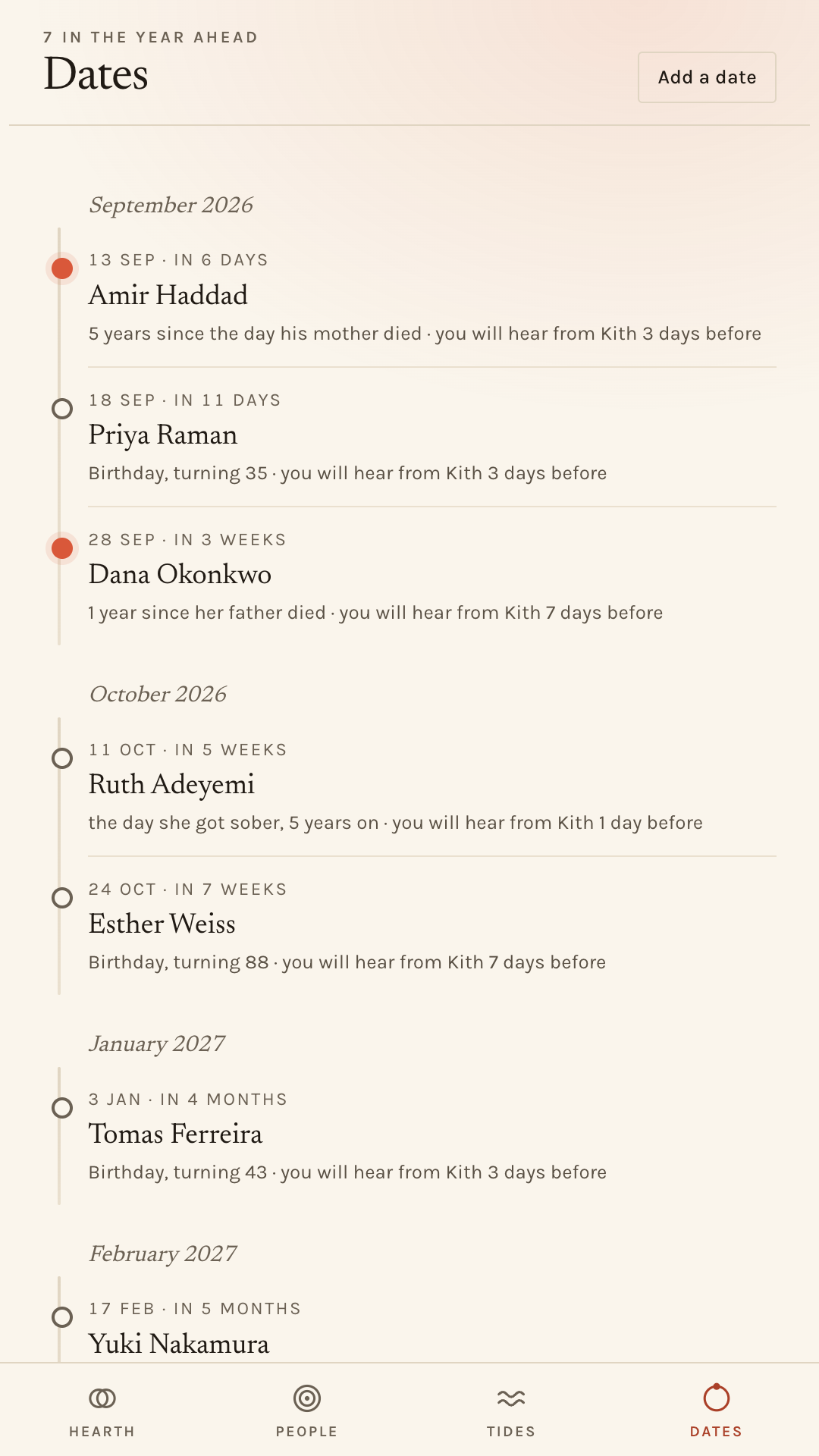
The Dates screen: a vertical river of months with birthdays and tender dates marked along it.

The dates that are harder than birthdays

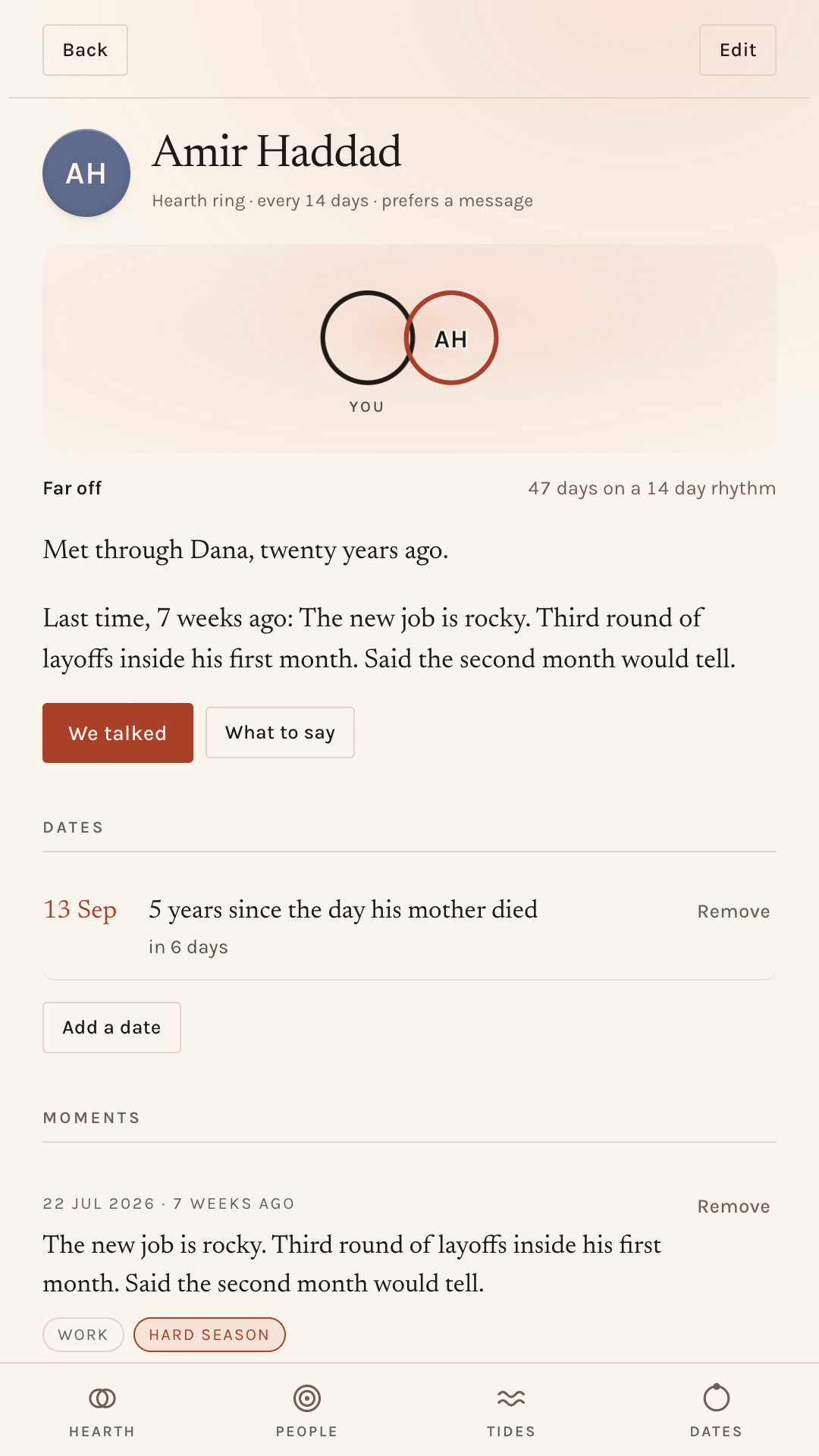
Friday is one year since Dana's father died. Even a line means a lot.

Birthdays, of course. But intimacy is made of the other days too: the anniversary of a death, the day someone got sober, the day the citizenship came through, the day you met in the rain in Osaka.

Mark them once, choose how many days of warning you want, and Kith will tell you before the day arrives rather than after. Showing up on those days is the entire point of the app.

Architecture, not a promise

What Kith can never see

Your contacts

There is no contacts permission and no contact picker in the app. Every name in Kith was typed by you, one at a time. Slower to start, and the only version of this idea that is not creepy.

Your calls and messages

Kith cannot read either, and does not ask. A catch up exists because you said it happened. If you save a number, Kith fills in your own dialler or messaging app and then gets out of the way. You press send, and Kith never learns whether you did.

The internet

Kith does not request the INTERNET permission. It cannot upload anything, because Android will not let it open a connection at all, and you can check that on the Play listing before you install. No account, no sync, no analytics, no crash reporter, no advertising ID.

The other person

No read receipts, no reply rates, nothing about whether they wrote back. Kith measures what you give, never what you get. Instrumenting your friends would be surveillance with extra steps.

Software for the five, the fifteen and the fifty who actually matter.

Get it on Google Play
What is deliberately not here. No contact book import, because the picker a WebView can reach would mean handing over the whole book. No automatic call logging, for the same reason. No encrypted backup yet: export writes a plain JSON or CSV file to your Downloads folder, so keep it where you would keep a diary. No widgets, no Wear OS, English only. And no paid tier at all. Every person, every ring, every date, free.